Say Something: Prevent Suicide

Say Something: Prevent Suicide

Preventing tragedies through awareness.
Integrated Suicide Prevention for the Entire School Community

Suicide is a leading cause of death for young people aged 15-24¹. In fact, suicide death rates for students as young as 5-years-old have skyrocketed in recent years.² Gun violence prevention is a factor as well, with 9 out of 10 suicide attempts with a firearm resulting in fatality.³   

A research-informed companion program to the Say Something program, Prevent Suicide provides all members of your school community – educators, parents, and students – with custom, audience-specific and developmentally-appropriate training modules focused on recognizing the warning signs of suicide and how to assist to a young person in crisis. 

Educators and parents learn to identify warning signs and how to help a child or teen who is having thoughts of suicide or self-harm.  
Students in grades 6-12 learn the warning signs of suicide, mental health self-care, and how to be an Upstander who will “say something” to a Trusted Adult if they notice the warning signs in oneself or a peer.  

Online program access is available to schools and districts at no cost, thanks to our generous donors. A live virtual training option is also available. 


Please note: If you are currently experiencing a suicidal crisis and need help, please dial 988 to reach the Suicide & Crisis Lifeline or call 911 immediately. 

1,269

Confirmed young lives saved from suicide

8,100+

Students helped during mental health crises

403,000+

Anonymous tips received through our system

19

Planned school shootings prevented

From an Educator

How It Works

The research-informed Say Something: Prevent Suicide program was developed in consultation with our advisory board. The board includes Jonathan Singer, Ph.D., LCSW, the past president of the American Association for Suicidology and host of The Social Work Podcast and Cheryl King, Ph.D., an expert in suicide risk factors, and youth suicide prevention and intervention programs, and other leading minds in suicide prevention. 

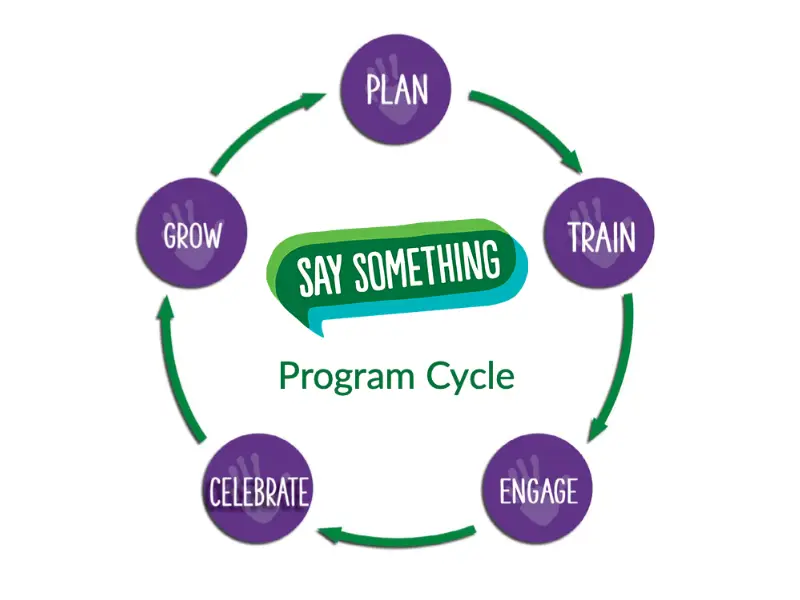
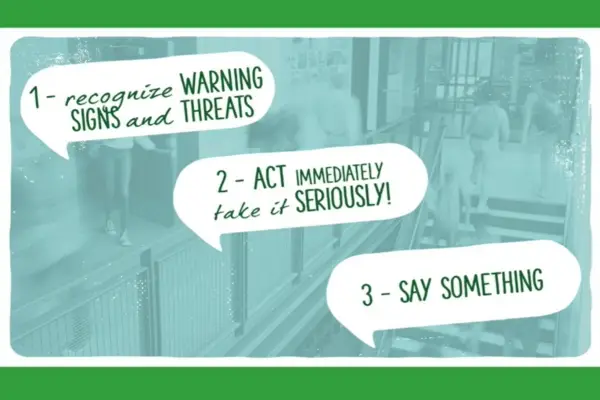
Say Something: Prevent Suicide includes audience-specific, developmentally appropriate training modules for students, educators and parents (in both English and Spanish), teaching a simple three-step model that is reinforced throughout the program cycle:  

Recognize warning signs: Learn the warning signs of suicide. 
Act Immediately, Take it Seriously: Understand how to take action and overcome barriers that may exist to reporting a concern about suicide or self-harm. 
“Say Something”: Discover how to intervene by knowing who to go to for help. 

Plan and Train Educators

Prior to training students in Say Something: Prevent Suicide, it is recommended that educators complete the Educator training. Additionally, educators should plan for program implementation using the Plan Template for each stage of the Program Cycle.
Train Students

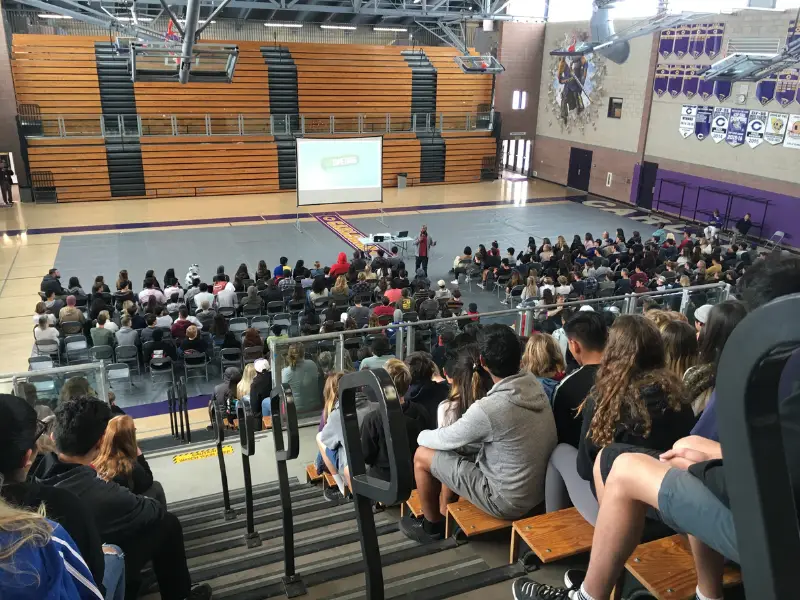
The research based Prevent Suicide training video and student workbook expand on the core Say Something program to help students recognize the specific warning signs of suicide in their peers; how to take these warning signs seriously; and how to get help.
Engage Students

Brief sets of age-specific lessons further develop the key messaging of the Say Something program for middle and high school students, through the lens of suicide prevention.

Celebrate

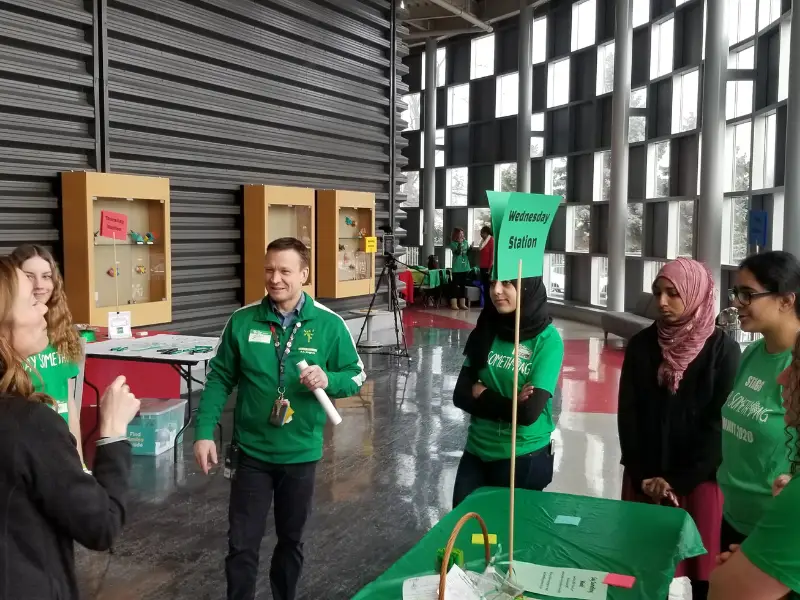
Celebrate the Say Something message throughout the school year and in activities during Say Something Week in March. 
Grow

Invite parents to participate in the Say Something: Prevent Suicide Parent Training module. This training helps parents and caregivers understand the prevalence of youth suicide; the warning signs and risk factors that are specific to youth suicide; and what to do if they are concerned about a child displaying warning signs. 

Discuss other ways to expand and improve your Say Something: Prevent Suicide programming next year. For example: 

Start or expand SAVE Promise Clubs to increase youth engagement and empowerment on the topic of suicide prevention. 
Add the Say Something: Trusted Adult workshop for educators and community members. 
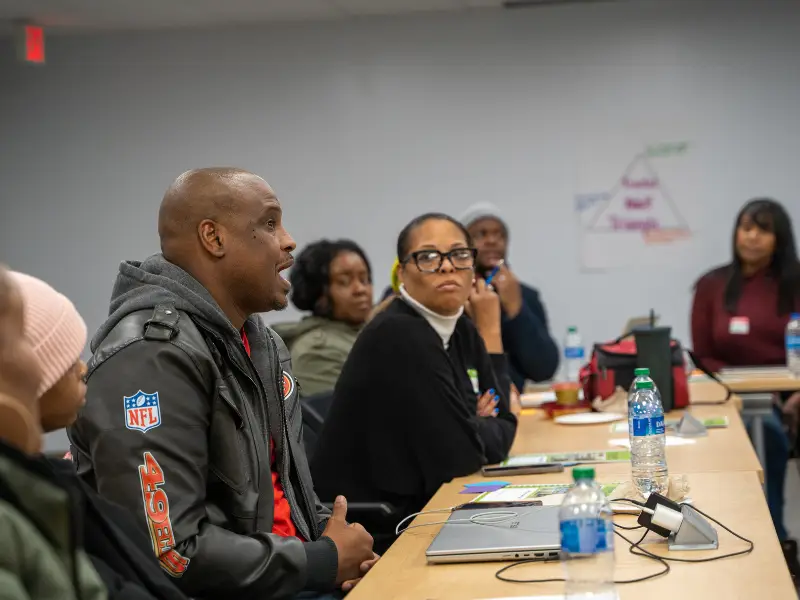
Do Suicide Prevention Programs Work?

Do Suicide Prevention Programs Work?

Research has shown that evidence-based suicide prevention programs and school threat assessment teams have been effective in reducing and helping to stop suicide. 


Importantly, interpersonal violence, bullying and aggression have also declined as a result of these programs. They have also lowered expulsion and suspension rates, showing increased harmony in school.

Donor Supported. Often No Cost.

Donor Supported. Often No Cost.

Budget concerns shouldn’t be a barrier to building a safe and supportive school climate where all students can thrive. At Sandy Hook Promise, it’s central to our mission. That’s why our programs are often available at no cost, thanks to our generous donors.  
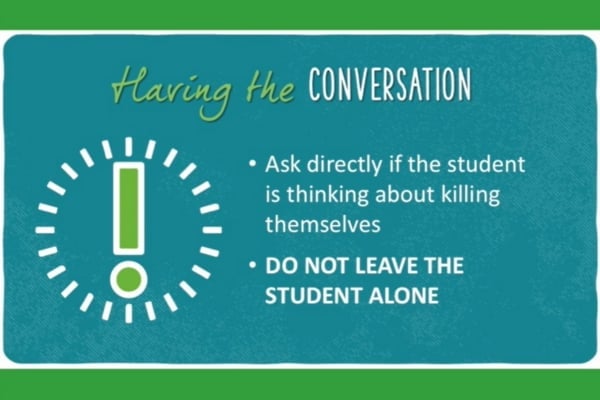
Look Inside

Take a look at sample Say Something: Prevent Suicide resources

Educator Training

Educator Training

An excerpt from the “Trusted Adult” training video for educators.  

The video is accompanied by an Educator Handbook. Both are available in English and Spanish. 
Student Training

Student Training

An excerpt from the training video for students.   
Instructor Manual

Instructor Manual

A sample lesson plan from the Grade 9-10 Identity Unit. 

The curriculum is accompanied by presentation slides and a Student Workbook. 
Parent Training

Parent Training

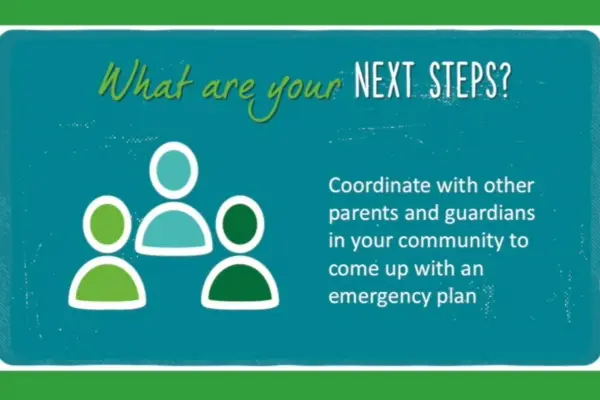
An excerpt from the “Trusted Adult” training video for parents.  

The video is accompanied by a Parent Workbook. Both are available in English and Spanish. 
 

Get Started

To learn more about bringing Say Something: Prevent Suicide, our Educator and Trusted Adult trainings, or any other Sandy Hook Promise programs and services to your school, district, or community, please submit the form below.

This form is not for sharing mental health or safety concerns. Submissions are not monitored 24/7, and they are not anonymous.
Click here to Share a Mental Health
or Safety Concern
or call 1 (844) 572-9669

Your Information


No acronyms, please!

No acronyms, please!


Your Information


e.g. Instructional Coach, Assistant Principal, etc.


Sandy Hook Promise may use your contact information to provide you with materials that we believe are of interest. You may choose to opt out of receiving additional materials at any time by contacting us or unsubscribing at the bottom of any email you receive from us.


Explore More Programs from Sandy Hook Promise

Sandy Hook Promise Is A Recognized Top-Rated Nonprofit Organization

Sources

  1. CDC: Curtin, S. C., & Heron, M. (2019). Death rates due to suicide and homicide among persons aged 10-24: United States, 2000—2017 (NCHS Data Brief No. 352). National Center for Health Statistics, Hyattsville. (WISQ 2019) 
  2. CDC: Death Rates for Motor Vehicle Traffic Injury, Suicide, and Homicide Among Children and Adolescents aged 10–14 Years — United States, 1999–2014. MMWR Morb Mortal Wkly Rep 2016;65:1203. 
  3. Annals of Internal Medicine
  4. University of Wisconsin Population Health Institute

Sign Up for Our Educator Newsletter

Stay informed on what Sandy Hook Promise is doing to help prevent gun violence in schools, homes and communities.